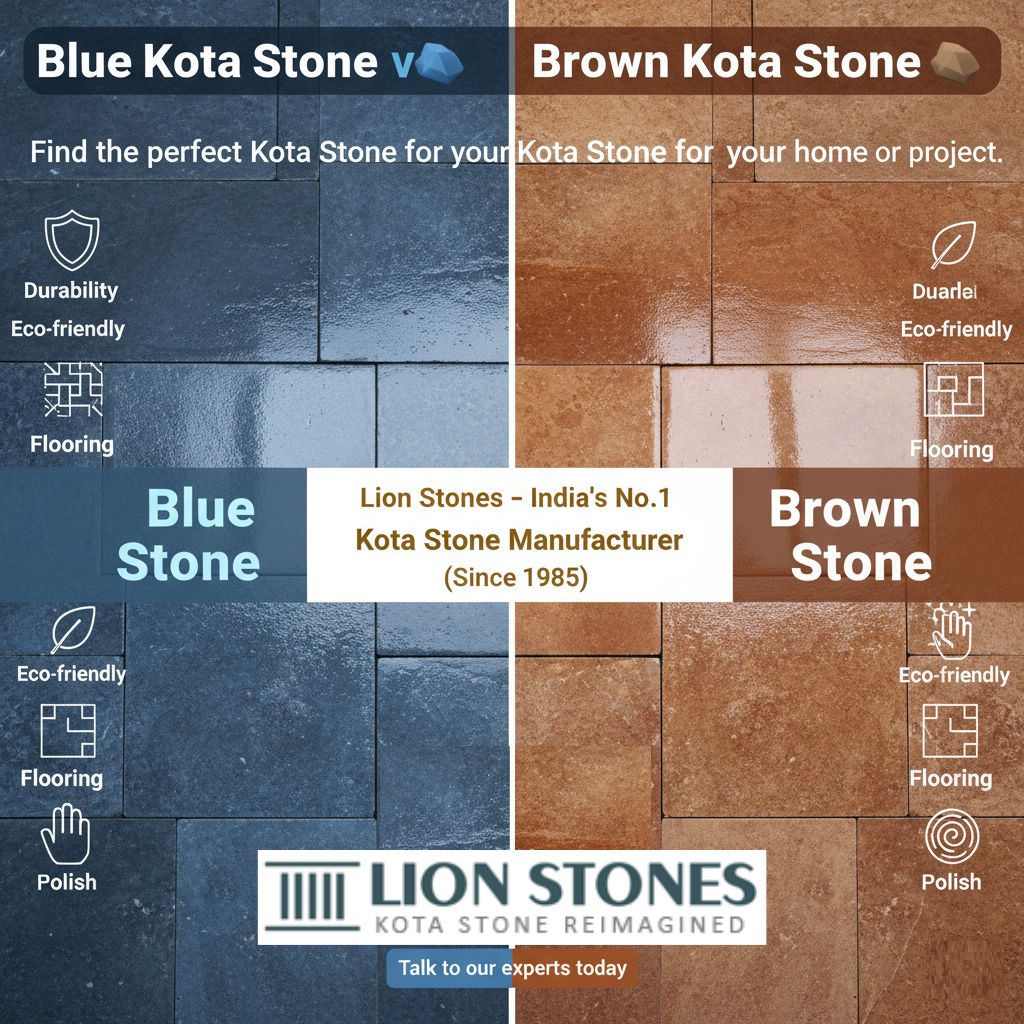
When it comes to timeless flooring materials, Kota Stone stands in a class of its own. Known for its durability, natural beauty, and affordable price, it has been a top choice for both modern and traditional Indian architecture for decades.
But when you start exploring Kota Stone options, you’ll notice two popular varieties — Blue Kota Stone and Brown Kota Stone. Both are sourced from the same region of Rajasthan but offer unique appearances, properties, and ideal applications.
So which one should you choose? Let’s explore the differences in detail to help you make the right decision.
What Is Kota Stone?
Kota Stone is a type of fine-grained limestone found mainly in the Kota and Jhalawar districts of Rajasthan. It is known for its toughness, low porosity, and ability to take a mirror finish, making it ideal for heavy footfall areas.
Used in everything from home interiors to government projects, Kota Stone offers a perfect blend of strength and elegance — all while being cost-effective and eco-friendly.
Blue Kota Stone: Elegant & Versatile
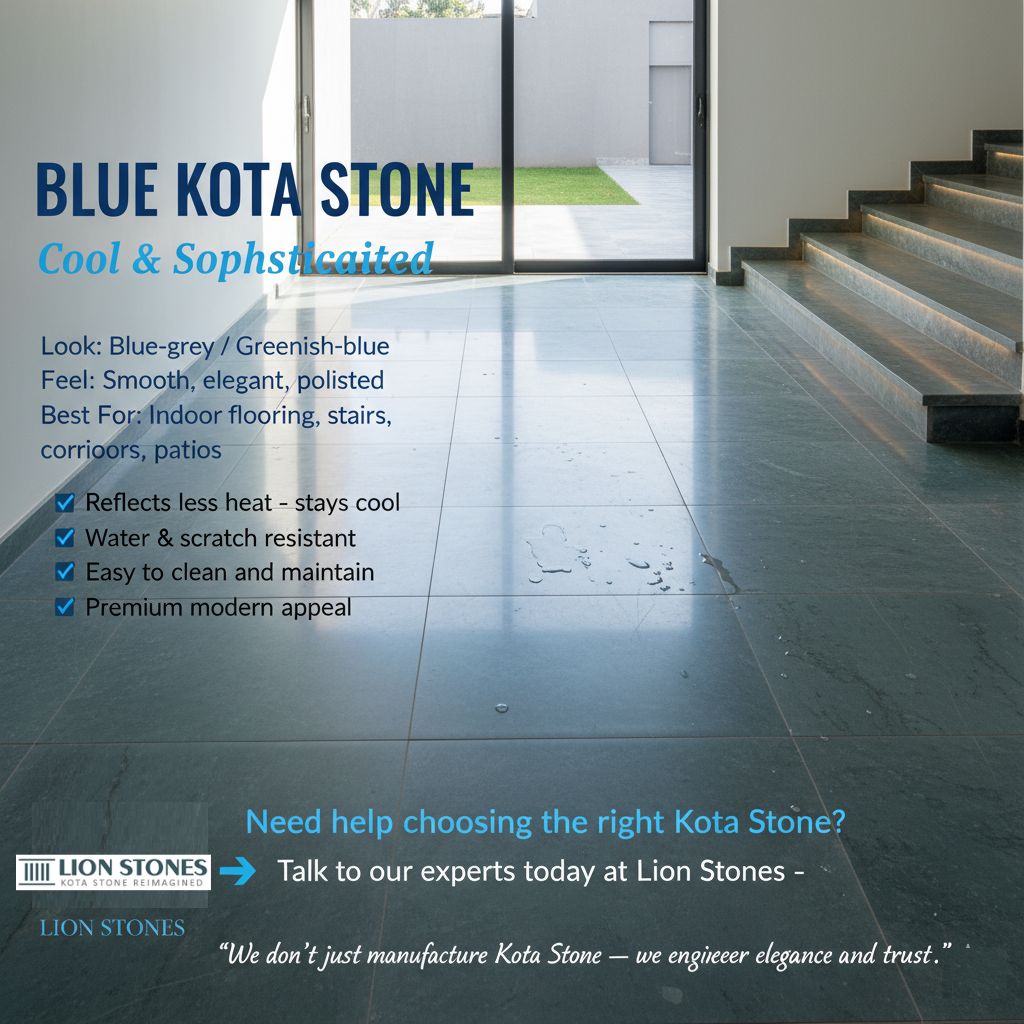
Blue Kota Stone, also called “Greenish-Blue Kota,” is the most recognized variant of Kota limestone. Its subtle blue-grey shade lends a cool, calm, and sophisticated appeal to any space.
Features of Blue Kota Stone
- Color: Blue-grey to greenish-blue tones
- Finish: Natural, polished, or leather finish
- Texture: Smooth surface with minimal grains
- Durability: Extremely hard and long-lasting
- Maintenance: Easy to clean and maintain
- Best suited for: Flooring, staircases, corridors, and patios
Advantages of Blue Kota Stone
- Reflects less heat — ideal for warm climates
- Resistant to water, wear, and tear
- Gives a premium and professional look
- Low maintenance and highly durable
Common Uses
You’ll often find Blue Kota Stone in residential floors, hospitals, schools, commercial lobbies, and outdoor pathways due to its strength and timeless aesthetic.
Brown Kota Stone: Warm & Earthy
Brown Kota Stone (also known as Kota Honey or Kota Brown) offers an earthy, rustic charm that perfectly complements both traditional and contemporary designs.
Features of Brown Kota Stone
- Color: Brown, tan, or golden hues
- Finish: Natural, brushed, or polished finish
- Texture: Slightly coarse, offering better grip
- Durability: Very strong and weather-resistant
- Maintenance: Simple and long-lasting
- Best suited for: Courtyards, parking areas, garden pathways, and wall cladding
Advantages of Brown Kota Stone
- Natural earthy tone hides dust and stains easily
- Provides good traction for outdoor use
- Adds warmth and depth to interior spaces
- Cost-effective and long-lasting
Common Uses
Brown Kota Stone is widely used in landscaping, exterior cladding, driveways, and open terraces. Its warm tone blends beautifully with Indian architectural styles and outdoor surroundings.
Blue Kota Stone vs Brown Kota Stone: Quick Comparison
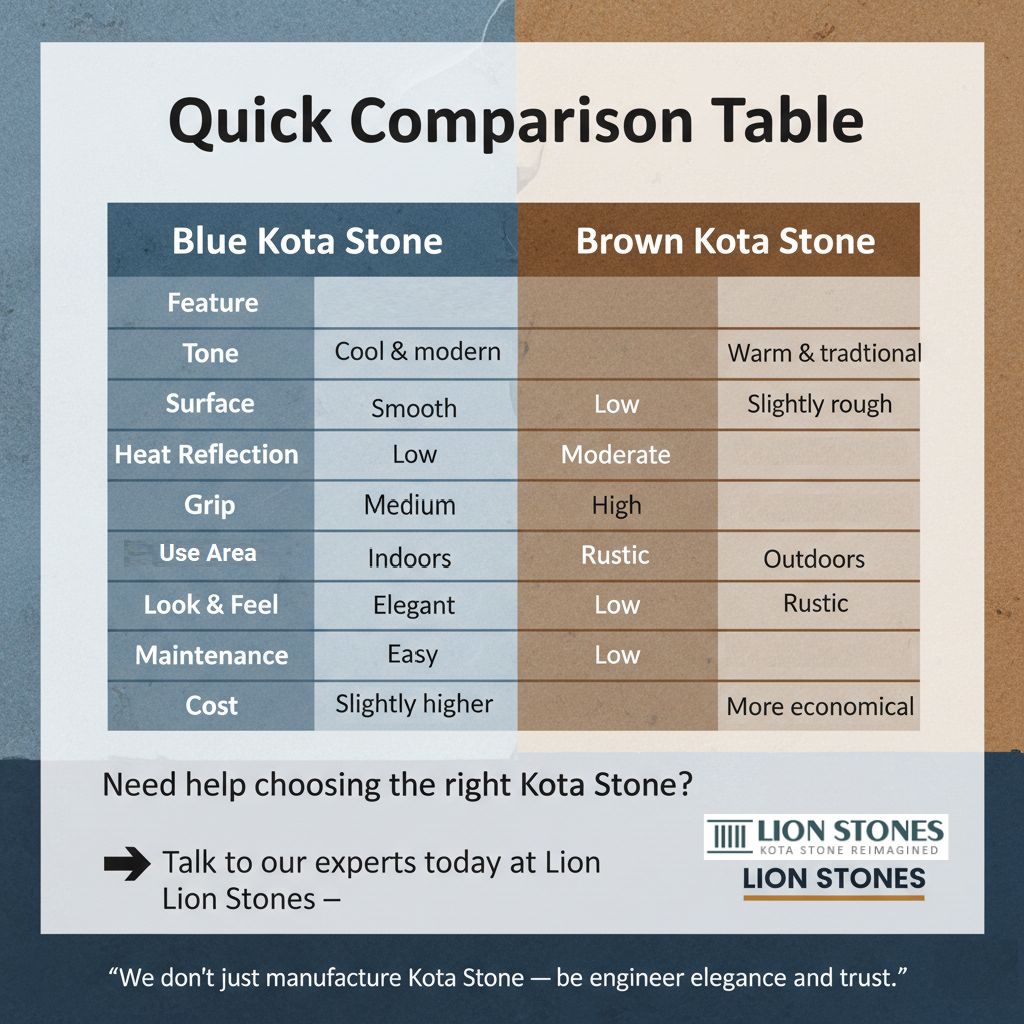
| Feature | Blue Kota Stone | Brown Kota Stone |
|---|---|---|
| Color Tone | Cool blue-grey | Warm brown & golden |
| Finish Options | Polished, natural, leather | Natural, brushed, polished |
| Surface Texture | Smooth | Slightly rough |
| Heat Reflection | Low heat absorption – stays cool | Moderate heat absorption |
| Slip Resistance | Moderate | High (better grip) |
| Ideal Use | Indoor flooring, stairs, walls | Outdoor flooring, cladding, landscaping |
| Aesthetic Appeal | Modern, professional | Earthy, traditional |
| Maintenance | Easy to clean | Hides dirt easily |
| Cost Range | Slightly higher | Budget-friendly |
Which Kota Stone Should You Choose?
Your choice between Blue Kota Stone and Brown Kota Stone depends on your design goals, location, and usage:
- If you want a modern, minimal, and polished look, go with Blue Kota Stone. It’s ideal for interiors and spaces that demand elegance.
- If you prefer a warm, rustic, and traditional feel, choose Brown Kota Stone, especially for exteriors and high-traffic outdoor areas.
Many architects and homeowners also use both shades in combination — for example, blue Kota indoors and brown Kota outdoors — to create visual harmony throughout the property.
Why Choose Kota Stone from Lion Stones

At Lion Stones, we’re not just suppliers — we’re the No.1 Kota Stone Manufacturer in India, delivering unmatched quality since 1985.
Here’s what makes us different:
- In-house quarrying and processing units in Roonjee near Jhalawar
- Modern technology for cutting, polishing, and finishing
- Eco-friendly mining and sustainable stone processing
- 35+ years of experience serving homeowners, builders, and government projects
- Pan-India supply network with timely delivery and trusted service
Every slab from Lion Stones carries the mark of precision, durability, and craftsmanship — built to last generations.
Frequently Asked Questions
1. Which Kota Stone is best for flooring?
If you’re designing indoor floors, Blue Kota Stone is preferred for its polished finish and cool tone. For outdoor or parking spaces, Brown Kota Stone performs better due to its non-slippery texture.
2. Is Kota Stone suitable for modern interiors?
Absolutely. Polished Blue Kota Stone looks elegant in modern homes and pairs beautifully with minimalist designs, glass panels, and steel accents.
3. Does Kota Stone need regular maintenance?
Not much. Just regular cleaning and occasional polishing can keep Kota Stone shining for years. It’s one of the most low-maintenance natural stones available.
4. What’s the average cost of Kota Stone?
Prices vary depending on thickness, finish, and size. Lion Stones offers factory-direct pricing — reach out to get a custom quote based on your requirements.
Need help choosing the right Kota Stone?
At Lion Stones, our experts can guide you in selecting the perfect stone for your project — from shade and finish to installation advice.
👉 Need help choosing the right Kota Stone? Talk to our experts today.